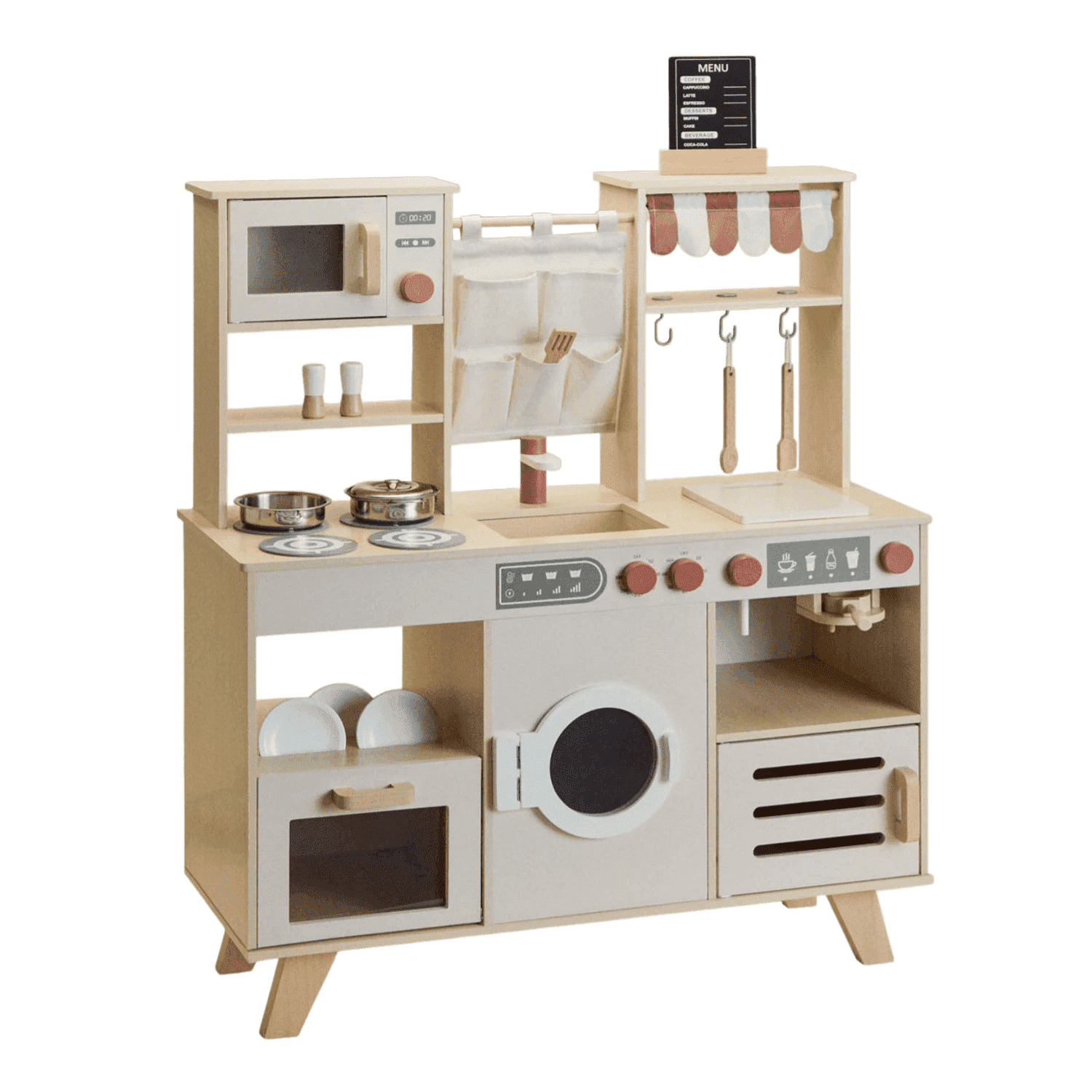
1. What age is a wooden play kitchen suitable for?
Most wooden play kitchens are designed for children aged 3 years and above. Many toddlers begin enjoying pretend cooking from 18 months, while children often continue playing with kitchen sets until 6–8 years old.
2. What are the benefits of a wooden play kitchen?
A wooden play kitchen encourages imaginative play, social interaction, language development, creativity, and fine motor skills. It helps children learn through role-playing everyday activities.
3. Is a wooden play kitchen safe for children?
Yes. High-quality wooden play kitchens are made with smooth edges, non-toxic paints, and child-safe materials. Always choose products that comply with ASTM, EN71, or other recognized toy safety standards.
4. Why choose a wooden play kitchen instead of a plastic one?
Wooden play kitchens are generally more durable, stable, environmentally friendly, and aesthetically pleasing. They often last for many years and can be passed down to younger siblings.
5. How long does a wooden play kitchen last?
A well-made wooden play kitchen can last for several years and withstand daily play. Many families use the same kitchen set for multiple children.
6. What features should I look for in a wooden play kitchen?
Look for realistic features such as an oven, sink, microwave, stovetop, storage shelves, turning knobs, and accessory sets. These details help create a more engaging play experience.
7. Are wooden play kitchens environmentally friendly?
Many wooden play kitchens are made from sustainably sourced wood and finished with non-toxic paints. They are generally considered a more eco-friendly alternative to plastic toys.
8. How do I clean a wooden play kitchen?
Simply wipe the surface with a soft damp cloth. Avoid excessive water or harsh cleaning products to protect the wood and painted finish.
9. Do wooden play kitchens require assembly?
Most wooden play kitchens require some assembly. They typically include detailed instructions and can be assembled with basic household tools.
10. What accessories work best with a wooden play kitchen?
Popular accessories include wooden food sets, cookware, utensils, coffee makers, toasters, aprons, and shopping baskets. Accessories help expand imaginative play and keep children engaged longer.